A Minnesota Winter Outage Is a Different Kind of Problem
When temperatures in Elk River or Sauk Rapids drop below zero and the power goes out, the clock starts immediately. A home without heat loses roughly 1 to 2 degrees per hour in moderate cold -- faster in extreme conditions. Pipes are at risk within hours. A family without a generator has to make decisions quickly and often under difficult circumstances.
A whole-home standby generator changes that entirely. It monitors utility power continuously and starts automatically when an outage occurs -- typically within 20 to 30 seconds. Your furnace keeps running. Your lights stay on. Your sump pump keeps your basement dry. Your water heater stays operational. You don't have to do anything.
Rol Air's licensed electricians install whole-home standby generators for homeowners throughout Elk River, Sauk Rapids, Otsego, St. Michael, Albertville, Sauk Rapids, and the broader NW Twin Cities area.
How Standby Generators Work
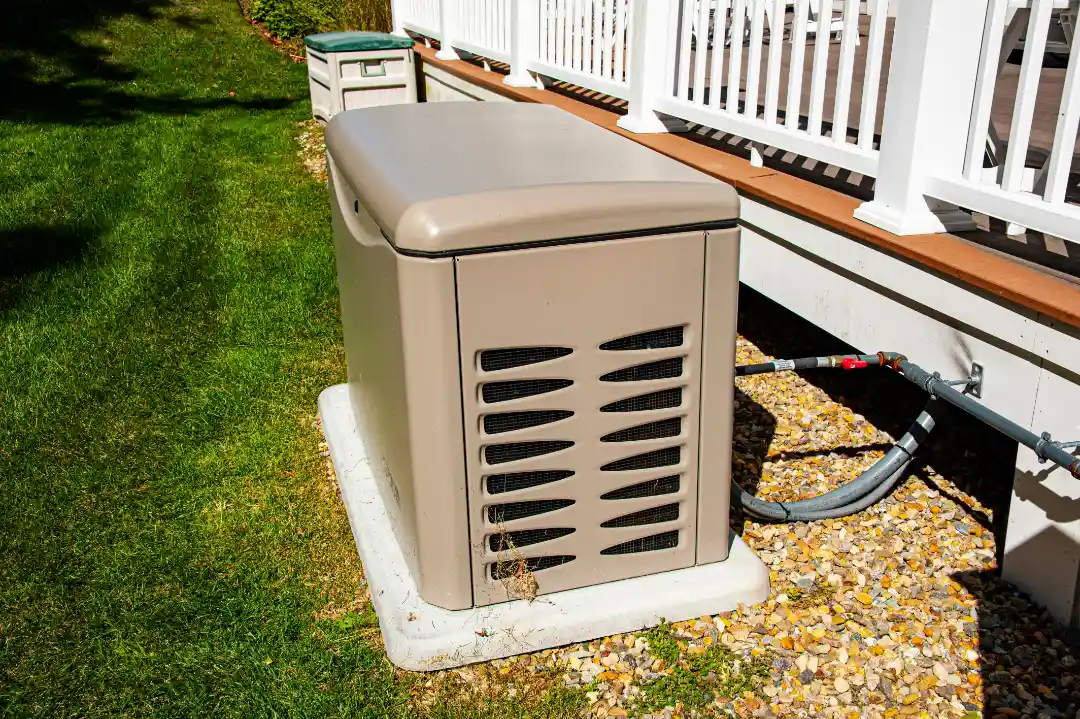
Standby generators are permanently installed outside the home and connected to the electrical panel through an automatic transfer switch (ATS). The ATS isolates your home from the utility grid during an outage and transfers the load to generator power. When utility power is restored, the ATS switches back automatically and the generator shuts down.
Most residential standby generators run on natural gas or propane, eliminating the need to store and rotate fuel. They require minimal maintenance -- typically an annual service -- and are designed for years of reliable operation.
Sizing Is the Critical Variable
Generator sizing determines what your system can power during an outage. Sizing is based on your home's critical load calculation -- the combined wattage of the systems you need running. For most Minnesota homeowners, that starts with the furnace or heating system, water heater, refrigerator, sump pump, and lighting. Add a well pump, medical equipment, or EV charger and the load increases. Our electricians conduct a load assessment before recommending a system size, so you get what your home actually needs.
The NW Twin Cities Outage Context
Communities farther from major transmission infrastructure -- including Sauk Rapids, Princeton, and Monticello -- can experience longer restoration times when outages occur. For homeowners with health conditions that depend on powered medical equipment, the case for a standby generator is direct. For households that have experienced outages of 24 hours or longer, the math on generator installation tends to resolve clearly.
What Installation Involves
Generator installation involves site preparation and unit placement, transfer switch installation at the panel, gas or propane connection, and final commissioning. Permits are required and are handled by our team. Most installations are completed in one to two days. Pairing a generator installation with whole-home surge protection protects your systems during startup and power restoration events.
Generator FAQs
As long as it has fuel. A generator connected to natural gas runs indefinitely during an outage, since natural gas lines typically remain operational even when the electrical grid is down. Propane-fueled generators run until the tank is empty. Tank sizing is part of the installation planning conversation -- we help you size appropriately for your outage duration expectations.
Rol Air: Plumbing, Heating, Cooling & Electrical serves the following locations:
- Elk River, MN
- Zimmerman, MN
- Otsego, MN
- St. Michael, MN
- Albertville, MN
- Anoka, MN
- Brooklyn Park, MN
- Buffalo, MN
- Coon Rapids, MN
- Foley, MN
- Maple Grove, MN
- Monticello, MN
- Plymouth, MN
- Princeton, MN
- Ramsey, MN
- Rogers, MN
- Sartell, MN
- Sauk Rapids, MN


OUR SERVICES
Contact Rol Air: Plumbing, Heating, Cooling & Electrical
We aim to leave all of our customers highly satisfied. If you want to have your plumbing, HVAC or electrical repair done by some of the best in the Twin Cities, call Rol Air today!
